
How to Choose a Ham Radio Antenna
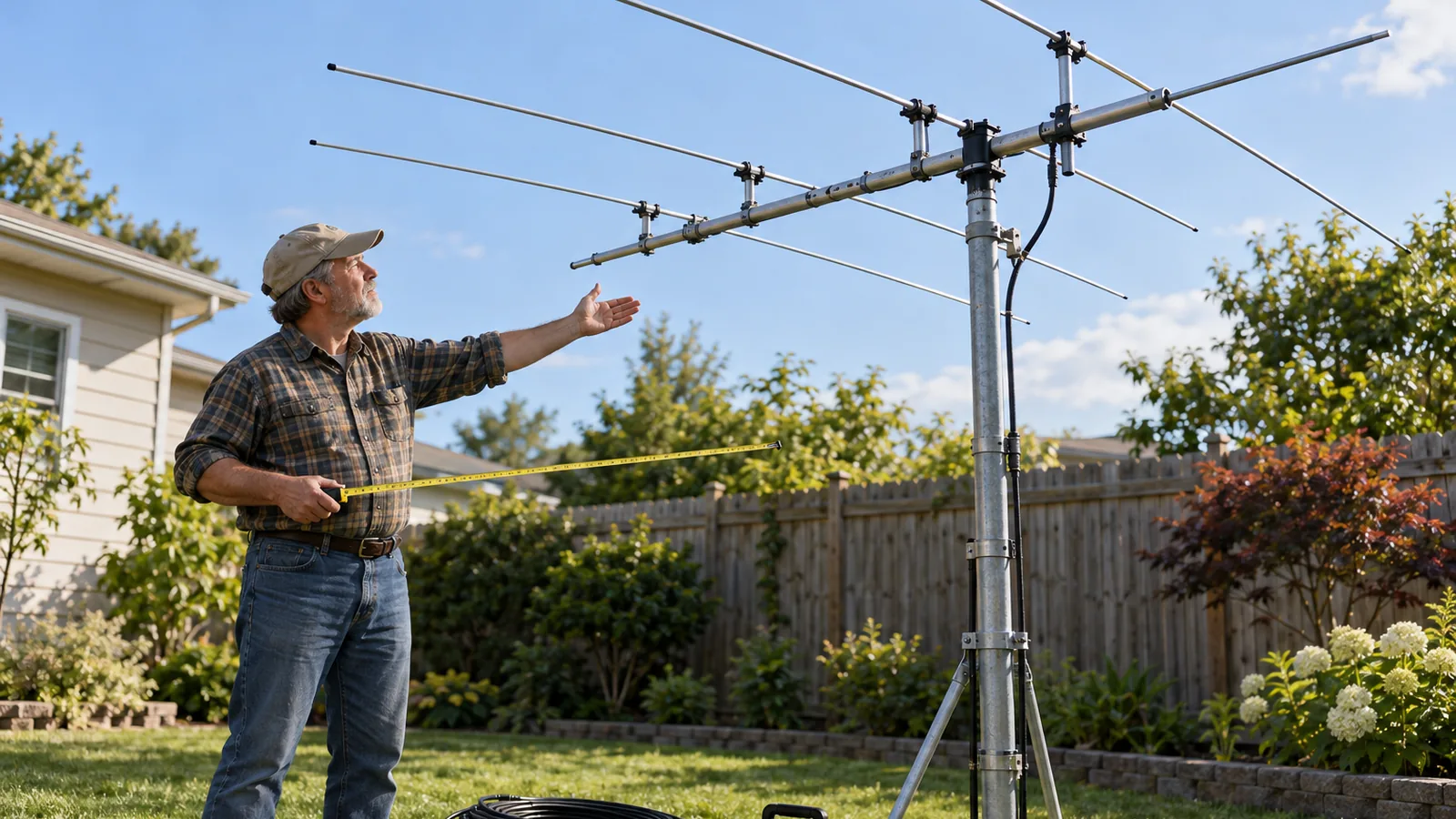
To choose a ham radio antenna, match its coverage to the bands you plan to use, then check whether your site has room and supports for that design. A single-band dipole needs enough wire span, while a ground-mounted vertical generally needs radials or another counterpoise. Keep the antenna and supports clear of power lines, and check the match with the tuner off.
Quick answer
How do you choose a ham radio antenna?
Match the antenna to the bands you plan to use, the space and supports at your site, and a feed-line and matching setup that works with your radio. Choose a dipole when you can fit its wire span, a vertical when horizontal space is limited and you can provide radials or a counterpoise, or a multiband design when its coverage and matching needs fit your setup. Keep the antenna and supports clear of power lines, assess RF exposure using transmit power, frequency, and antenna gain, then check the intended frequency at the antenna or feed point with an SWR meter or analyzer and the tuner off.
- List your intended bands and check that your license class permits them.
- Measure wire span, mounting points, and room for radials; decide if indoor or outdoor installation is practical.
- Compare dipole, vertical, multiband, and portable designs against your bands and site limits.
- Match the feed line to the system: coax is commonly 50 ohms, while ladder line is typically 300–600 ohms and needs an appropriate matching arrangement for a 50-ohm radio.
- Check the intended frequency at the antenna or feed point with the tuner off before transmitting.
How Do You Choose a Ham Radio Antenna?
List the bands and modes you plan to use. Start with the amateur bands you want to operate on, then note your preferred modes so you can compare antennas against your actual operating plans.
Check the radio’s connector and power requirements. Record the radio’s connector and operating-power limits, then confirm that the antenna system and any required matching parts are compatible before you buy.
Assess where you’ll operate. Decide whether the antenna will be indoors, outdoors, mobile, or portable, since the installation location affects which antenna choices are practical.
Measure space and supports. Check the available wire span, mounting points, and room for radials; also decide whether an indoor or outdoor installation is workable.
Compare antenna types against those limits. Consider a dipole, vertical, multiband antenna, or portable antenna based on your available space and intended bands. A vertical can save horizontal space and provide omnidirectional coverage, while a ground-mounted design generally needs radials or another counterpoise.
Check feed-line and matching needs. Common amateur coax is 50 ohms, while ladder line is typically 300–600 ohms and needs an appropriate matching arrangement for a 50-ohm radio. Confirm that the antenna, feed line, and tuner can work together for your chosen bands; matchability depends on the antenna design and length, feed line, tuner range, and installation.
Confirm safe placement. Account for RF exposure near people; the exposure calculation uses transmit power, frequency, and antenna gain. For indoor antennas, nearby wiring and metal can affect performance, and the antenna should be placed as high as practical.
Check the installed antenna before transmitting. With the tuner off, use an SWR meter or antenna analyzer at the antenna or feed point, and check the frequency you intend to use. Choose feed line for low loss at your highest operating frequency, since loss depends on feed-line type and frequency.
Match Antenna Types to Bands and Space
Choose by matching the antenna’s band coverage to the frequencies you plan to use, then rule out types your space or installation can’t support. For how to choose a ham radio antenna, compare the practical fit of each type before you buy.
- Dipole: A single-band dipole is a straightforward choice when you can fit its wire span and supports. Its SWR may rise toward the band edges, and a ladder-line-fed dipole with a suitable tuner may work on several HF bands, though coverage on every band isn’t guaranteed.
- Vertical: Consider one when horizontal space is limited or you want omnidirectional coverage. A ground-mounted design generally needs radials or another counterpoise, so account for that space before choosing it.
- Multiband antenna: Traps or parallel elements can let an antenna operate on several bands, but designs differ in bandwidth, complexity, efficiency, and matching needs. Whether a particular setup can be matched depends on its design and length, feed line, tuner range, and installation.
- Portable antenna: Choose this category when temporary supports and a setup you can move suit your operating conditions. One ARRL example covers 6–20 meters and uses telescoping whips and temporary supports.
Indoor wire dipoles and loops can fit in an attic or room, but nearby wiring and metal can affect performance; place an indoor antenna as high as possible.
A tuner can help match some multiband arrangements, but it doesn’t make every antenna suitable for every band. High SWR on coax between the tuner and antenna can turn power into heat, with losses affected by feed-line type and operating frequency.
Check Mounting, Feed Line, and Tuning Needs
Check the mounting point, feed line, matching arrangement, and clearance before choosing an antenna, because each can change whether the setup will work safely on your intended bands. Verify these details for your antenna and bands:
- Mounting and support: Confirm the location can support the antenna and provides the needed wire span, supports, and space for any radials. Indoor installation also needs careful attention to transmit power because transmitting indoors can raise RF-exposure concerns and interfere with nearby electronics.
- Feed line: Check that the cable type and connection suit both the antenna and radio. Coax is commonly 50 ohms, while ladder line is typically 300–600 ohms and needs a suitable matching arrangement for a 50-ohm radio. Choose feed line for low loss at your highest operating frequency; coax loss can increase when SWR is high, and the amount depends on feed-line type and frequency.
- Matching: Confirm the antenna’s design and length, feed-line type, installation, and tuner range can produce a match on each band you plan to use. A tuner matches the antenna system’s impedance to what the transceiver needs to see, but it doesn’t change antenna resonance or the SWR between the tuner and antenna. A tuner at the radio can lower the SWR seen by the radio while leaving the antenna-side SWR unchanged.
- Clearance and exposure: Keep the antenna clear of people and nearby objects, and assess RF exposure for your operating power, frequency, and antenna gain. The ARRL RF-exposure calculator uses those inputs to estimate exposure.
To check matching, place an SWR meter or antenna analyzer at the antenna or feed point, turn the tuner off, and measure on the frequency you plan to use.
Compare Antenna Choices at a Glance
Compare antenna types by the bands they cover, the space they need, and how you’ll match them; the practical choices supported here are single-band dipoles, verticals, and multiband antennas.
| Antenna type | Typical use | Band coverage | Space or mounting needs | Matching considerations |
|---|---|---|---|---|
| Single-band dipole | Use on one planned band | Cut for a particular band | Needs a suitable wire span and supports | Commonly fed with coax |
| Vertical | Use where horizontal space is limited | Coverage depends on design | A ground-mounted design generally needs radials or another counterpoise | Requirements depend on the design |
| Multiband antenna | Use across several planned bands | May cover several bands using traps or parallel elements | Requirements vary by design | Bandwidth, complexity, and matching needs vary; a ladder-line-fed dipole with a suitable tuner may work on several HF bands, but not necessarily every band |
The table points to a practical choice: start with your available space and the bands you intend to use, then check whether the antenna’s matching arrangement fits your radio system.
Frequently Asked Questions
Does an antenna tuner make an antenna resonant?
No. An antenna tuner matches the antenna system’s impedance to what your transceiver needs to see, but it doesn’t change the antenna’s resonance or the SWR on the line between tuner and antenna. Check resonance at the antenna feed point with the tuner off, using an SWR meter or antenna analyzer on the frequency you plan to use.
What is a good first ham radio antenna for a beginner?
A single-band dipole is a practical first choice if you can fit its wire span and supports, and you know which band you want to use. It’s cut for a particular band and commonly fed with coax; if you need less horizontal space, consider a vertical, but plan for radials or another counterpoise when the design requires them.
How far should I stay from a transmitting ham radio antenna?
Use an RF-exposure calculation rather than a fixed distance, because the safe separation depends on transmit power, frequency, and antenna gain. Enter all three values in the ARRL RF-exposure calculator, then keep people outside the calculated exposure area while transmitting.
How do I ground a ham radio antenna for lightning protection?
Use a grounding and bonding plan suited to the antenna installation, and keep the antenna and its supports clear of power lines, where contact is hazardous. The available guidance here doesn’t specify grounding components or connection points, so have a qualified installer assess the site and local requirements before you connect the antenna system to ground.
How high should I mount a ham radio antenna?
Mount an indoor antenna as high as practical, since nearby wiring and metal can affect its performance. For any location, first confirm you have suitable supports and wire span, and keep the antenna and supports clear of power lines.
Conclusion
If you can support a dipole’s wire span and plan to use one band, choose a single-band dipole. If horizontal space is tight or you need several bands, compare vertical and multiband designs against your room for radials, feed-line setup, and tuner range.
Before buying, write down your intended bands, measure the mounting space, and confirm the antenna, feed line, and tuner can work together.
