10 Best Mobile Ham Radios for 2026
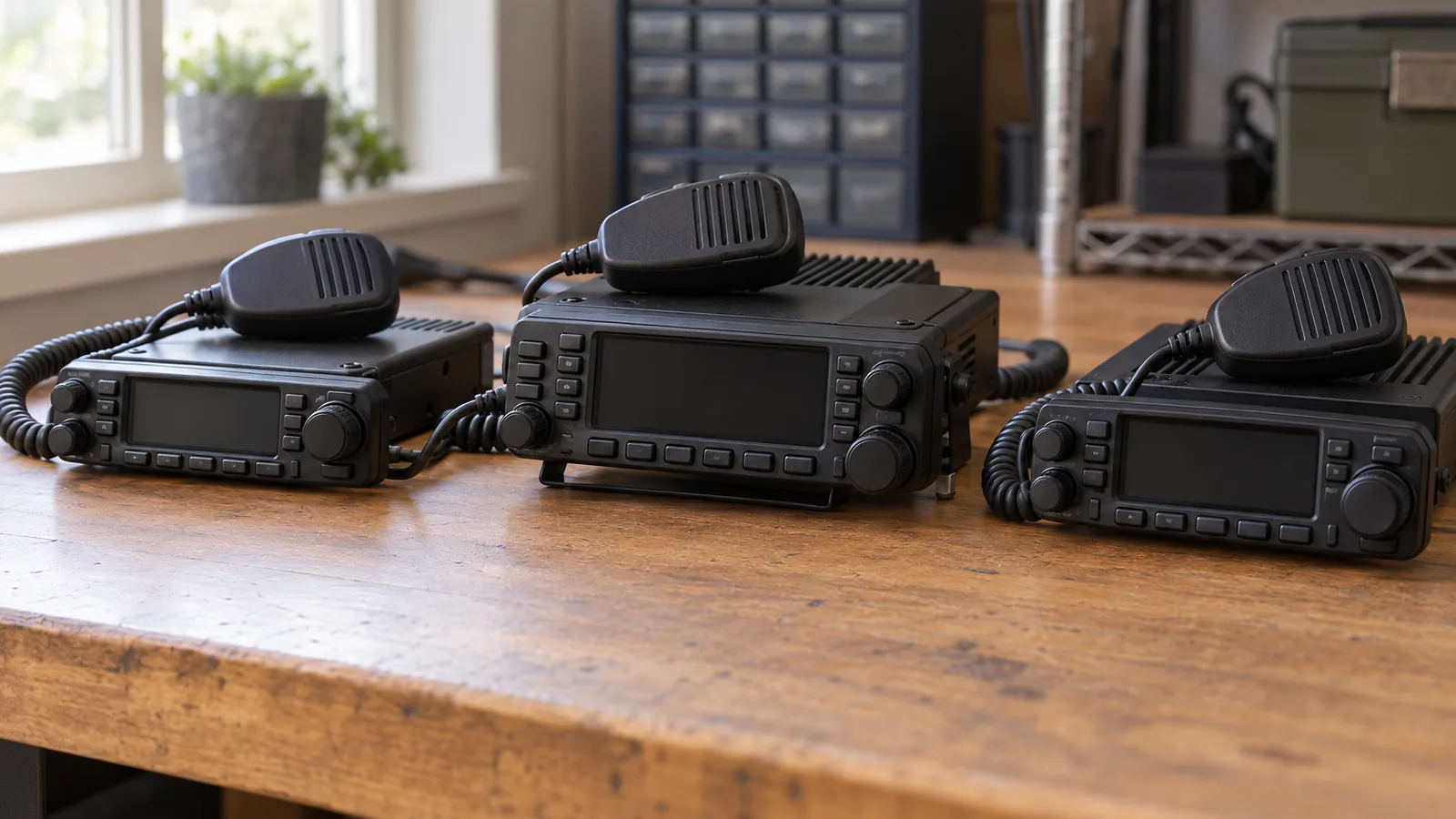
The Retevis MA1 Mobile Radio is the best overall fit if you want dual-band operation with cross-band repeat and dual receive. For GPS and APRS tools, consider the BTECH UV-50PRO; for a detachable control panel, the Radioddity DB50; and for four-band coverage, the TH-9800D Quad Band Mobile Radio.
For budget-friendly dual-band use, the Retevis RT95 and AnyTone AT-778UVII offer 25 W output, while the BTECH UV-25X2 adds quad watch. The AnyTone AT-778UV suits repeater features, the AT-779UV and QYT KT-8900 suit compact installations, and the AT-778UVII is another beginner-friendly option.
Choose based on transmit bands, output power, and receive or monitoring features. Match the radio to your vehicle layout too, especially if you need a detachable display.
The comparison table summarizes transmit bands, transmit power, and receive features for all 10 radios.
Our top picks for mobile ham radios
- Best Overall: Retevis MA1 Mobile Radio for VHF/UHF operators who want cross-band repeat and a detachable vehicle control head
- Best Budget Dual-Band: Retevis RT95 Mobile Radio for budget-conscious 2 m/70 cm mobile or basic base-station use
- Best for APRS and Bluetooth: BTECH UV-50PRO Mobile Radio for mobile VHF/UHF operators who want GPS/APRS, app programming, and Bluetooth features
| Retevis MA1 Mobile Radio |  | Best Overall | Transmit bands: VHF 144–148; UHF 420–450 MHz | Transmit power: 50 W VHF; 40 W UHF max | Receive features: Dual receive; cross-band; air/FM AM receive | VIEW LATEST PRICE | Read Our Analysis |
| BTECH UV-50PRO Mobile Radio |  | Best for APRS and Bluetooth | Transmit bands: VHF/UHF amateur bands | Transmit power: 5/25/50 W selectable | Receive features: Dual-channel; GPS/APRS; FM/aviation receive | VIEW LATEST PRICE | Read Our Analysis |
| Radioddity DB50 Mobile Radio |  | Best for Detachable Panel | Transmit bands: 136–174 MHz VHF; 400–490 MHz UHF | Transmit power: 50 W VHF; 40 W UHF | Receive features: Dual receive; cross-band repeat | VIEW LATEST PRICE | Read Our Analysis |
| TH-9800D Quad Band Mobile Radio |  | Best for Four-Band Coverage | Transmit bands: 10m, 6m, 2m, 70cm | Transmit power: 50W max; High/Mid/Low | Receive features: Dual display; cross-band repeat | VIEW LATEST PRICE | Read Our Analysis |
| Retevis RT95 Mobile Radio |  | Best Budget Dual-Band | Transmit bands: 2 m / 70 cm | Transmit power: 25/15/5 W (2023 review) | Receive features: Dual watch; dual standby | VIEW LATEST PRICE | Read Our Analysis |
| BTECH UV-25X2 Mobile Radio |  | Best for Quad Watch | Transmit bands: 144–148 MHz; 420–450 MHz | Transmit power: VHF 25 W peak; UHF 20 W peak | Receive features: 136–174; 400–520 MHz; quad watch | VIEW LATEST PRICE | Read Our Analysis |
| AnyTone AT-778UVII Mobile Radio |  | Best for Beginner Dual-Band | Transmit bands: VHF/UHF (2 m/70 cm) | Transmit power: 25/15/5 W | VIEW LATEST PRICE | Read Our Analysis | |
| AnyTone AT-778UV Mobile Radio | 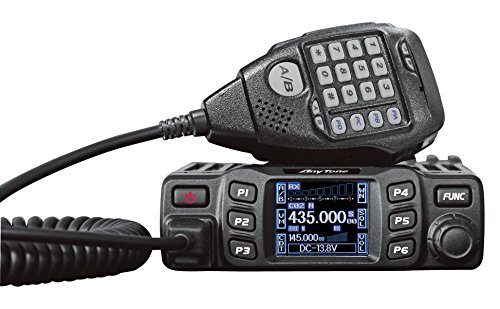 | Best for Repeater Use | Transmit bands: VHF 144–148; UHF 420–450 MHz | Transmit power: 25/15/5 W | Receive features: VHF/UHF; CTCSS/DCS scan | VIEW LATEST PRICE | Read Our Analysis |
| AnyTone AT-779UV Mobile Radio |  | Best for Compact Installation | Transmit bands: VHF 144–148; UHF 420–450 MHz | Transmit power: VHF >20 W; UHF >18 W | Receive features: VHF 136–174; UHF 400–490 MHz | VIEW LATEST PRICE | Read Our Analysis |
| QYT KT-8900 Mobile Radio |  | Best for Vehicle Convenience | Transmit bands: 2m VHF / 70cm UHF | Transmit power: 20 W stated maximum | Receive features: Quad watch / quad standby | VIEW LATEST PRICE | Read Our Analysis |
More Details on Our Top Picks
Retevis MA1 Mobile Radio
For VHF/UHF drivers who need relay reach, the Retevis MA1 is an all-around choice with a useful mix of vehicle features. It transmits on 144–148 MHz and 420–450 MHz, with selectable 50/20/5 W VHF and 40/20/5 W UHF output. Cross-band repeat relays signals between bands, while dual receive monitors two frequencies at once. Its 180° flip panel gives you more options for mounting the radio body and positioning the controls.
Connect the detachable panel to the radio with the included 3 m cable; the radio runs on 13.8 V DC. It holds 999 channels and receives air-band AM and FM broadcasts, alongside its VHF/UHF coverage. Owners report clear reception and flexible installation, though one found the menu labels difficult to read in dim light. The panel’s flip design helps you position the controls for your vehicle.
Pros: Clear reception and strong value (2025) · Dual receive and cross-band repeat offer flexible operation (2025) · Detachable panel supports flexible vehicle installation (2025).
Cons: Owner describes transmitted audio as serviceable, not especially full (2025) · Menu labels reported difficult to read in dim light (2025).
Skip it if: you need menu labels that remain easy to read in dim light.
- Transmit bands:VHF 144–148; UHF 420–450 MHz
- Transmit power:50 W VHF; 40 W UHF max
- Receive features:Dual receive; cross-band; air/FM AM receive
- Control head:Detachable, 180° flip panel
- Memory capacity:999 channels
- Supply voltage:13.8 V DC ±15%
BTECH UV-50PRO Mobile Radio
Selectable 5/25/50 W output makes the BTECH UV-50PRO a fit for APRS- and Bluetooth-focused VHF/UHF operators. GPS/APRS tools include smart beaconing, Mic-E, and ACK handling, while Bluetooth supports phone programming, HFP audio, and KISS TNC data workflows. Its app handles channel edits and CSV import/export, useful for copying radio setups across vehicles. Dual-channel receive adds FM and aviation reception, and the radio stores 180 channels across 6 banks.
The radio runs from a nominal 13.8 V supply and offers a color display on the microphone for key operating information. Owners praised its transmit and receive audio. The microphone cord can be short for an under-seat installation, so plan the control and mic placement around that reach.
Pros: Owner praised transmit and receive audio · Owner measured 54 W VHF, 48 W UHF · Owner praised AI voice clarity.
Cons: Owner reported short microphone cord for under-seat installation · Owner initially reported AI processing filtered repeater signals, then retracted concern.
Skip it if: your under-seat setup requires a long microphone cord.
- Transmit bands:VHF/UHF amateur bands
- Transmit power:5/25/50 W selectable
- Receive features:Dual-channel; GPS/APRS; FM/aviation receive
- Control head:Color display
- Memory capacity:180 channels; 6 banks
- Supply voltage:13.8 V nominal
Radioddity DB50 Mobile Radio
For VHF/UHF vehicle setups needing flexible control placement, the Radioddity DB50’s detachable panel lets you position controls for easier access. It transmits on 136–174 MHz VHF and 400–490 MHz UHF, with up to 50 W on VHF and 40 W on UHF. You can program its 758 memory channels with CHIRP by selecting DB50, then switch between VFO and channel modes. It also receives air-band and 220 MHz signals, though transmitting on those bands isn’t listed among its capabilities.
Mount the detachable front panel where you can see and reach it easily; the radio runs on 13.8 V DC. CTCSS/DCS tone signaling and high, medium, and low power settings give you practical operating options. Owners praised its dual receive, cross-band repeat, reception, audio, and detachable-head installation.
One owner found the lowest volume setting too loud, and others found the recessed front-panel buttons hard to press. Its panel placement is the main installation advantage, while those controls may be awkward to use.
What to check: The DB50-K panel bracket is recommended for mounting the detachable panel.
Cons: Owner found lowest volume setting too loud (eHam review, 2025).
Skip it if: you need to connect a headset directly to the radio; owners report that direct headset support isn’t available.
- Transmit bands:136–174 MHz VHF; 400–490 MHz UHF
- Transmit power:50 W VHF; 40 W UHF
- Receive features:Dual receive; cross-band repeat
- Control head:Detachable front panel
- Memory capacity:758 memory channels
- Supply voltage:13.8 V DC
TH-9800D Quad Band Mobile Radio
Unlike the dual-band Icom IC-2730A, the TH-9800D suits budget-minded drivers who want four-band coverage. It transmits on 10m, 6m, 2m, and 70cm, with cross-band repeat for relaying between segments. Its dual display shows two frequencies at once, and High, Mid, and Low settings provide up to 50W output. You also get 800 alphanumeric memory channels, giving you room to organize frequently used frequencies.
The detachable faceplate lets you mount the controls apart from the radio, while the included cable and software support programming, including with CHIRP. Owners report long-term truck use and good value, though some find the manual unclear for certain settings. One owner notes that 10m and 6m are FM-only, and local activity can limit those bands. That FM-only operation is the main limitation for operators seeking more modes on those bands.
Pros: Owner reported long-term truck use (2024) · Owner described it as a solid radio (2026) · Owner praised its value for a budget radio (2024).
Cons: Note some units have had one-side failures (2024) · 10m and 6m FM use can be limited by local activity (2024).
Skip it if: you need SSB on 10m or 6m; both bands operate in FM only.
- Transmit bands:10m, 6m, 2m, 70cm
- Transmit power:50W max; High/Mid/Low
- Receive features:Dual display; cross-band repeat
- Control head:Detachable, remote-mount faceplate
- Memory capacity:800 alphanumeric channels
- Supply voltage:—
Retevis RT95 Mobile Radio
For budget-conscious operators, its 2 m/70 cm coverage and three power levels make it a practical dual-band choice. It transmits and receives on 2 m and 70 cm, with 25/15/5 W output and CHIRP-compatible programming for 200 channels. Dual watch monitors main and sub-channel activity, while the 180-degree rotating display lets you set a useful viewing angle. Programmable radio and microphone keys add control from the front seat.
The compact body suits trucks, jeeps, RVs, or a base setup with a 13.8 V, 10 A supply. Its fixed control head stays attached, and the radio can get hot during long transmissions; a reviewer also measured 20–21 W on high. CHIRP support makes channel management easier.
Pros: 2023 owner-reviewer reported clear transmit quality and good receive audio · 2023 owner-reviewer found the display readable and the radio compact.
Cons: 2023 reviewer said the faceplate is not detachable · 2023 reviewer measured about 20–21 W on high, below the advertised 25 W.
Skip it if: your vehicle setup requires the display and radio body to be mounted separately; the control head isn’t detachable.
- Transmit bands:2 m / 70 cm
- Transmit power:25/15/5 W (2023 review)
- Receive features:Dual watch; dual standby
- Control head:Fixed, non-detachable (2023 review)
- Memory capacity:200 channels
- Supply voltage:13.8 V DC; 10 A (listing)
BTECH UV-25X2 Mobile Radio
Owners praise its compact vehicle fit; space-conscious operators also get quad-watch monitoring. The BTECH UV-25X2 transmits on 144–148 MHz VHF and 420–450 MHz UHF, with peak output of 25 W on VHF and 20 W on UHF. Quad watch monitors up to four frequencies or channels, and 200 memory channels give you room to save them. Owners also report clear signal reports and easy CHIRP programming, though some mention UHF intermod.
The kit includes a speaker microphone, DC cable, mounting brackets and hardware, plus an RJ45-to-K1 audio adapter. Its RJ45 microphone port supports audio input and output, and the radio runs on 13.8 V DC. You can use it in a vehicle or turn it into a home or office base station with a separate RPS-30M power supply.
Owners report that it gets warm during use, so heat is a practical consideration in a compact installation. The included mounting hardware supports vehicle installation, while the four-frequency watch helps keep other channels in view.
Pros: Clear signal reports · Compact vehicle fit · Easy CHIRP programming.
Cons: It gets warm during use · Some UHF intermod.
Skip it if: you need a mobile radio for extended use without warming up; owners report that this model gets warm.
- Transmit bands:144–148 MHz; 420–450 MHz
- Transmit power:VHF 25 W peak; UHF 20 W peak
- Receive features:136–174; 400–520 MHz; quad watch
- Control head:—
- Memory capacity:200 channels
- Supply voltage:13.8 V DC ±15%
AnyTone AT-778UVII Mobile Radio
With a 180-degree rotating TFT display, the AT-778UVII suits new mobile operators who want straightforward dual-band VHF/UHF operation. It covers 2 m and 70 cm and offers 25, 15, or 5 W output, so you can select among three power levels. Its 200 memory channels give you room to save frequently used channels. Built-in speakers in both the radio and microphone make audio available at either end of the setup.
The radio includes a microphone, fused power cable, mounting brackets, and screws. Programming uses the manufacturer’s software, and the required USB programming cable isn’t included. Owners report good receive audio and local repeater access, while some report overheating during longer transmissions.
A long-term owner has used units in a truck and as a base radio. For regular long transmissions, heat buildup is a practical concern with this model.
Pros: Good receive audio quality · Some owners report reaching local repeaters · One long-term owner reports using units in a truck and as a base radio.
Cons: Overheating during longer transmissions · An owner reports intermod interference in urban mobile use.
Skip it if: your transmissions often run long; owners report overheating during extended transmissions.
- Transmit bands:VHF/UHF (2 m/70 cm)
- Transmit power:25/15/5 W
- Receive features:—
- Control head:180° rotating display; detachable unstated
- Memory capacity:200 memory channels
- Supply voltage:—
AnyTone AT-778UV Mobile Radio
Repeater operators who want VHF/UHF calling options in a mobile radio get a practical setup for repeater and simplex use. The AnyTone AT-778UV supports single, group, selective, and emergency calls, plus CTCSS/DCS scanning for finding tone codes. Its fixed control head has a 180° rotatable TFT display, and the radio has a built-in cooling fan and speaker.
The full-alloy body and lighted microphone keypad suit a vehicle installation, while VOX supports voice-operated transmission. Programming software is available from AnyTone’s website, and owners describe clear audio, good reception, and reliable repeater access. Owners also report slow scanning, heat during longer transmissions, and occasional urban intermod interference. Programming-cable or CHIRP connection problems come up for some owners, so plan to use the programming software if cable setup becomes an issue.
Pros: Clear transmit and receive audio · Good reception and repeater access · Bright, sharp display noted by owners.
Cons: Can run hot during longer transmissions · Intermod interference in some urban/mobile settings.
Skip it if: you need fast scanning, since owners report that this radio scans slowly.
- Transmit bands:VHF 144–148; UHF 420–450 MHz
- Transmit power:25/15/5 W
- Receive features:VHF/UHF; CTCSS/DCS scan
- Control head:Fixed, 180° rotatable display
- Memory capacity:—
- Supply voltage:—
AnyTone AT-779UV Mobile Radio
At 4.88 × 3.98 × 1.42 inches, the AnyTone AT-779UV suits drivers who need a compact chassis for a tight vehicle installation. Its dual-band FM operation covers VHF 144–148 MHz and UHF 420–450 MHz for transmitting, with receive coverage from 136–174 MHz and 400–490 MHz. Output exceeds 20 W on VHF and 18 W on UHF.
You get 200 nameable memories for organizing repeaters and other channels, plus CTCSS, DCS, DTMF, 2-tone and 5-tone signaling. It offers amateur and professional operating modes, with computer programming software available from AnyTone.
You can adjust LCD brightness and lock the main unit and microphone keys. Its 13.8 V DC ±15% supply requirement suits a vehicle electrical setup, and the microphone has a keypad for radio control.
Programming can take time to learn, and the display is basic compared with newer radios.
Pros: Compact footprint praised in long-term review (2024) · Keypad microphone praised in independent review (2026) · Memory system described as useful for travel (2026).
Cons: Programming can take time to learn (2026 review) · Basic display compared with newer radios (2026 review).
Skip it if: you want a modern display with detailed information; its screen is basic compared with newer radios.
- Transmit bands:VHF 144–148; UHF 420–450 MHz
- Transmit power:VHF >20 W; UHF >18 W
- Receive features:VHF 136–174; UHF 400–490 MHz
- Control head:—
- Memory capacity:200 programmable memories
- Supply voltage:13.8 V DC ±15%
QYT KT-8900 Mobile Radio
For compact 2m/70cm vehicle setups, the QYT KT-8900 adds practical convenience with its included cigarette-plug power and programming cables. It covers VHF and UHF, stores 200 channels, and offers quad watch and quad standby, so you can monitor multiple frequencies. Selectable narrow or wide bandwidth and CTCSS, DCS, DTMF, 2-tone, 5-tone, and MSK signaling give you useful channel options.
At 5.7 x 1.9 x 7.5 inches and 2.6 pounds, its compact chassis suits tight installations, and the included power cable connects to a vehicle cigarette socket. It runs on 13.8 V and delivers a stated maximum output of 20 W. CHIRP support and the programming cable simplify setup, though owners report awkward menu operation and heat buildup during extended use.
Pros: Compact size suits tight vehicle installations (Miklor, 2015) · Reviewer reported clear, loud receive audio (Miklor, 2015) · Programming cable included, according to listing (2026).
Cons: Owner reported output-power and RF-final concerns (eHam review, 2026) · Owner reported receiver overload near traffic-control equipment (Reddit, 2026).
Skip it if: you prefer straightforward menus; owners report awkward menu operation.
- Transmit bands:2m VHF / 70cm UHF
- Transmit power:20 W stated maximum
- Receive features:Quad watch / quad standby
- Control head:—
- Memory capacity:200 channels
- Supply voltage:13.8 V
Mobile Ham Radios: Key Specs Side by Side
Here is how the 10 picks line up on transmit bands, transmit power, receive features, control head and memory capacity. Cells marked with a dash are specs the maker leaves out of its listing.
| Pick | Transmit bands | Transmit power | Receive features | Control head | Memory capacity |
|---|---|---|---|---|---|
| Retevis MA1 Mobile Radio | VHF 144–148; UHF 420–450 MHz | 50 W VHF; 40 W UHF max | Dual receive; cross-band; air/FM AM receive | Detachable, 180° flip panel | 999 channels |
| BTECH UV-50PRO Mobile Radio | VHF/UHF amateur bands | 5/25/50 W selectable | Dual-channel; GPS/APRS; FM/aviation receive | Color display | 180 channels; 6 banks |
| Radioddity DB50 Mobile Radio | 136–174 MHz VHF; 400–490 MHz UHF | 50 W VHF; 40 W UHF | Dual receive; cross-band repeat | Detachable front panel | 758 memory channels |
| TH-9800D Quad Band Mobile Radio | 10m, 6m, 2m, 70cm | 50W max; High/Mid/Low | Dual display; cross-band repeat | Detachable, remote-mount faceplate | 800 alphanumeric channels |
| Retevis RT95 Mobile Radio | 2 m / 70 cm | 25/15/5 W (2023 review) | Dual watch; dual standby | Fixed, non-detachable (2023 review) | 200 channels |
| BTECH UV-25X2 Mobile Radio | 144–148 MHz; 420–450 MHz | VHF 25 W peak; UHF 20 W peak | 136–174; 400–520 MHz; quad watch | — | 200 channels |
| AnyTone AT-778UVII Mobile Radio | VHF/UHF (2 m/70 cm) | 25/15/5 W | — | 180° rotating display; detachable unstated | 200 memory channels |
| AnyTone AT-778UV Mobile Radio | VHF 144–148; UHF 420–450 MHz | 25/15/5 W | VHF/UHF; CTCSS/DCS scan | Fixed, 180° rotatable display | — |
| AnyTone AT-779UV Mobile Radio | VHF 144–148; UHF 420–450 MHz | VHF >20 W; UHF >18 W | VHF 136–174; UHF 400–490 MHz | — | 200 programmable memories |
| QYT KT-8900 Mobile Radio | 2m VHF / 70cm UHF | 20 W stated maximum | Quad watch / quad standby | — | 200 channels |
Factors to Consider When Choosing Mobile Ham Radios
Match Transmit Bands to Your Needs
Start with the bands you plan to transmit on. The radios in this roundup range from dual-band coverage to four transmit bands; choose the bands that meet your operating needs.
Band count also doesn’t tell you which operating modes a radio supports. The IC-7100 covers HF, 6 m, 2 m, and 70 cm with all-mode operation, while the IC-2730A is a dual-band analog-FM radio for 2 m and 70 cm. If you want HF or a mode beyond analog FM, compare those capabilities directly instead of treating every additional band as the same benefit.
Choose Enough Transmit Power
Compare the output settings for the bands you’ll use, then choose a radio with settings that suit your installation and operating needs. The IC-2730A offers 50 W, 15 W, and 5 W settings, while the IC-7100’s rated output varies by band. Those figures describe transmitter output, not guaranteed practical range: an advertised power setting alone doesn’t establish how far your signal will reach.
Avoid choosing by the highest wattage figure alone. The IC-7100, for example, is rated for 2–100 W on HF/50 MHz, 2–50 W on 144 MHz, and 2–35 W on 430/440 MHz. Match the output figure to the band you’ll use, rather than assuming one rating applies across the radio’s coverage.
Check Receive Features
Consider whether you need to monitor two bands or frequencies at once. The IC-2730A can simultaneously receive VHF/VHF, UHF/UHF, or VHF/UHF, which may suit you if you want to keep watch on two VHF/UHF signals.
Also separate receive capability from transmit capability. A radio’s ability to receive on two bands at once doesn’t by itself tell you which bands or modes it can transmit on; compare those functions independently. If you only need to monitor one frequency at a time, simultaneous reception may matter less than the bands and modes you intend to use.
Decide on a Control Head
Think about where the radio body and controls will fit in your vehicle. A separate controller can give you more flexibility in placing the controls apart from the main unit: both the IC-7100 and IC-2730A use a separate controller. Separate-controller mounting is worth prioritizing when the available space for the radio body differs from the space available for its controls.
Before choosing, picture the controller within reach and the main unit in its intended mounting spot. That practical layout can matter more than a feature you won’t use. The separate-controller design supports flexible mounting, but it doesn’t establish that every vehicle installation will suit your setup.
Compare Memory and Programming
Look at how you’ll enter and manage channels, especially if you need a large, organized set of memories. Programming tools and workflows can affect setup effort: the ARRL review of an earlier D578 variant describes using CPS software to adapt an existing handheld codeplug, while also recommending that users build a comprehensive codeplug in CPS. Plan for programming time if your setup depends on many channels or detailed codeplug organization.
A shortcut from an existing codeplug can help, but it isn’t the same as having a finished configuration. For a simpler setup, favor a programming process you can manage comfortably; for a more involved one, allow time to organize and review the channel data.
Verify Supply Voltage
Check the voltage requirement in the documentation for the radio you choose, then compare it with the supply available in your vehicle. Match the radio’s voltage requirement to the intended supply before installation. A power figure in watts describes transmit output, not the voltage the radio needs to operate; don’t use one as a substitute for the other.
Frequently Asked Questions
What is the best mobile ham radio for a new Technician?
A dual-band VHF/UHF radio with straightforward analog FM operation is a practical first mobile setup. The AnyTone AT-778UVII Mobile Radio fits that approach, with 2 m and 70 cm coverage and selectable 25 W, 15 W, and 5 W output.
Should I choose an analog or digital mobile radio?
Choose analog FM if you mainly want conventional VHF/UHF repeater and local simplex operation; choose digital if you need a specific digital mode or network. The Icom IC-2730A is an analog-FM dual-band example, while digital features vary by radio and can add programming work.
Can I use a mobile ham radio as a base station?
Yes, a mobile radio can serve as a base station when you provide a suitable DC power supply and antenna setup. The Retevis RT95 is described for vehicle or base use with a 13.8 V, 10 A supply, and its compact body can suit either installation.
What antenna and power wiring do I need for a mobile ham radio?
Use an antenna designed for the bands you plan to transmit on, mounted and connected for your vehicle, and wire the radio to a suitable DC supply. According to Yaesu, the Retevis MA1 runs on 13.8 V DC, while the RT95 base setup calls for a 13.8 V, 10 A supply.
Which radios in this roundup support cross-band repeat?
The Retevis MA1, Radioddity DB50, and TH-9800D support cross-band repeat. That feature relays signals between bands, so it can help extend communications when your handheld and a repeater or other station use different bands.
Conclusion
Choose the best mobile ham radios by starting with the job you need the radio to do: pick the TH-9800D if four-band coverage matters, the BTECH UV-50PRO for phone-based programming and APRS tools, or the Retevis RT95 for a simpler dual-band setup. Then match the radio’s control-panel layout and installation needs to the space in your vehicle. Narrow your choices to the features you’ll use, and select the model that fits both your operating priorities and mounting plan.
Sources
- icomamerica.com (icomamerica.com)
- icomamerica.com (icomamerica.com)
- arrl.org (arrl.org)
- bridgecomsystems.com (bridgecomsystems.com)
- reddit.com (reddit.com)
- mygmrs.com (mygmrs.com)
- yaesu.com (yaesu.com)